Unwanted hair growth is not one of the symptoms people usually associate with lupus. But for women managing the condition with corticosteroid medications, it is a documented and often frustrating side effect, and the skin changes that come with autoimmune illness can make standard hair removal approaches more complicated.
For women exploring options for electrolysis permanent hair removal in Melbourne who are navigating lupus or lupus-like symptoms, understanding which methods carry risk and why electrolysis sits differently in that context is worth understanding to make the best decision.
Why Lupus Complicates Hair Removal
Corticosteroids are among the most commonly prescribed medications for lupus management.
According to Better Health Victoria, unwanted hair growth is a recognised side effect of corticosteroid use. This can present as thicker, darker hair appearing on areas such as the chin, upper lip, or jawline, or as hypertrichosis, where finer hair develops across the arms, abdomen, or legs.
Beyond the medication side effects, lupus itself is frequently associated with photosensitivity, where light exposure can trigger or worsen a flare. This is an important consideration for people diagnosed with lupus when opting for hair removal treatment.
Comparing Hair Removal Methods
The distinction between methods matters considerably for women with lupus-affected skin:
| Hair Removal Method | Mechanism | Risk Consideration for Lupus |
|---|---|---|
| Laser | Concentrated light energy targets the pigment | Elevated risk due to photosensitivity |
| IPL | Broad-spectrum light pulses | Similar concerns to laser |
| Waxing | Mechanical removal at the surface | Repeated trauma to already sensitive skin |
| Electrolysis | Electrical current at the follicle level | Lower risk profile, no light-based mechanism |
Laser and IPL hair removal methods both rely on light energy, which raises concerns for individuals diagnosed with lupus, who have skin that reacts to UV and light-based exposure. Waxing temporarily removes unwanted hair, but it subjects already compromised skin to repeated mechanical trauma.
Electrolysis does not rely on light, which is why it is generally considered to carry a lower risk profile for this group.
That said, any woman with lupus or a diagnosed autoimmune condition should discuss hair removal options with her treating physician or rheumatologist before commencing treatment.
How Electrolysis Works
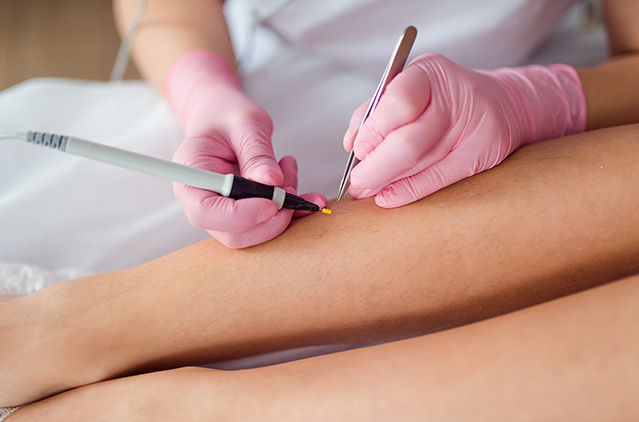
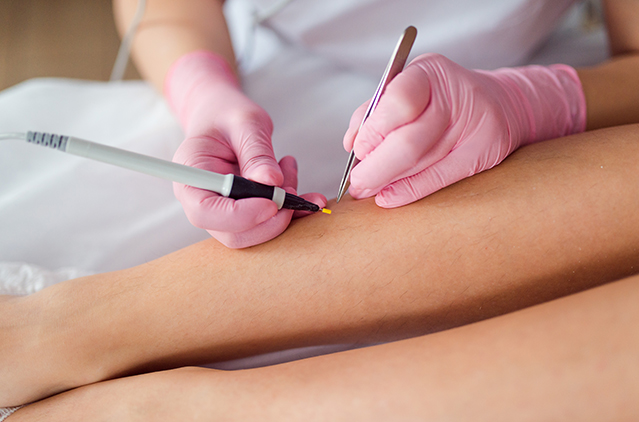
Electrolysis is the only permanent hair removal method approved by the FDA. It works by inserting an ultra-fine probe into the natural opening of the hair follicle. Next, a tiny electrical charge triggers a chemical reaction that destroys the stem cells responsible for hair growth. After electrolysis treatment is completed and the stem cells have been eliminated, the hair can never grow back.
Importantly, electrolysis permanent hair removal treatment works on all hair colours and types, including fine vellus hair that can appear in unusual areas due to medication-related hypertrichosis. This is a meaningful distinction, since laser treatment cannot reliably target light or fine hair.
Multiple electrolysis sessions are usually scheduled over several months because hair grows at different times within its natural growth cycles. Since not all hairs are present or visible at any one time, a series of electrolysis treatments ensures every follicle is addressed as each hair progresses through its individual cycle.
Mild tingling or stinging may occur during electrolysis treatment. Temporary redness or minor swelling at the treatment site is common and typically settles within a few hours. For women with sensitive or reactive skin, communicating these concerns clearly during consultation allows the electrologist to tailor the approach accordingly.
What to Ask at Your Electrolysis Consultation
It is recommended for women with lupus or lupus-like symptoms to discuss the following points at their electrolysis consultation:
- Current medications, particularly corticosteroids or immunosuppressants, which can affect skin condition and the healing response between sessions.
- Any areas of active inflammation, lesions, or discoid lupus involvement on the skin require careful assessment before treatment proceeds.
- Whether the condition is currently stable or in a flare period, since electrolysis permanent hair removal treatment timing may need to be adjusted accordingly.
A qualified electrologist will factor all of this into the treatment plan and can work alongside a client’s medical team where appropriate.
Summary
Lupus can add some complexity to decisions that would otherwise be more straightforward. For women dealing with medication-driven unwanted hair growth on top of an already demanding condition, having a permanent and light-free option available can be a real game changer to getting rid of unwanted hair.
Electrolysis does not offer quick results, but it does offer lasting ones, and for women dealing with unwanted hair growth, that distinction often matters the most. If you are considering getting electrolysis permanent hair removal treatment, starting with an honest conversation between your medical team and a qualified electrologist is usually the most practical first step.