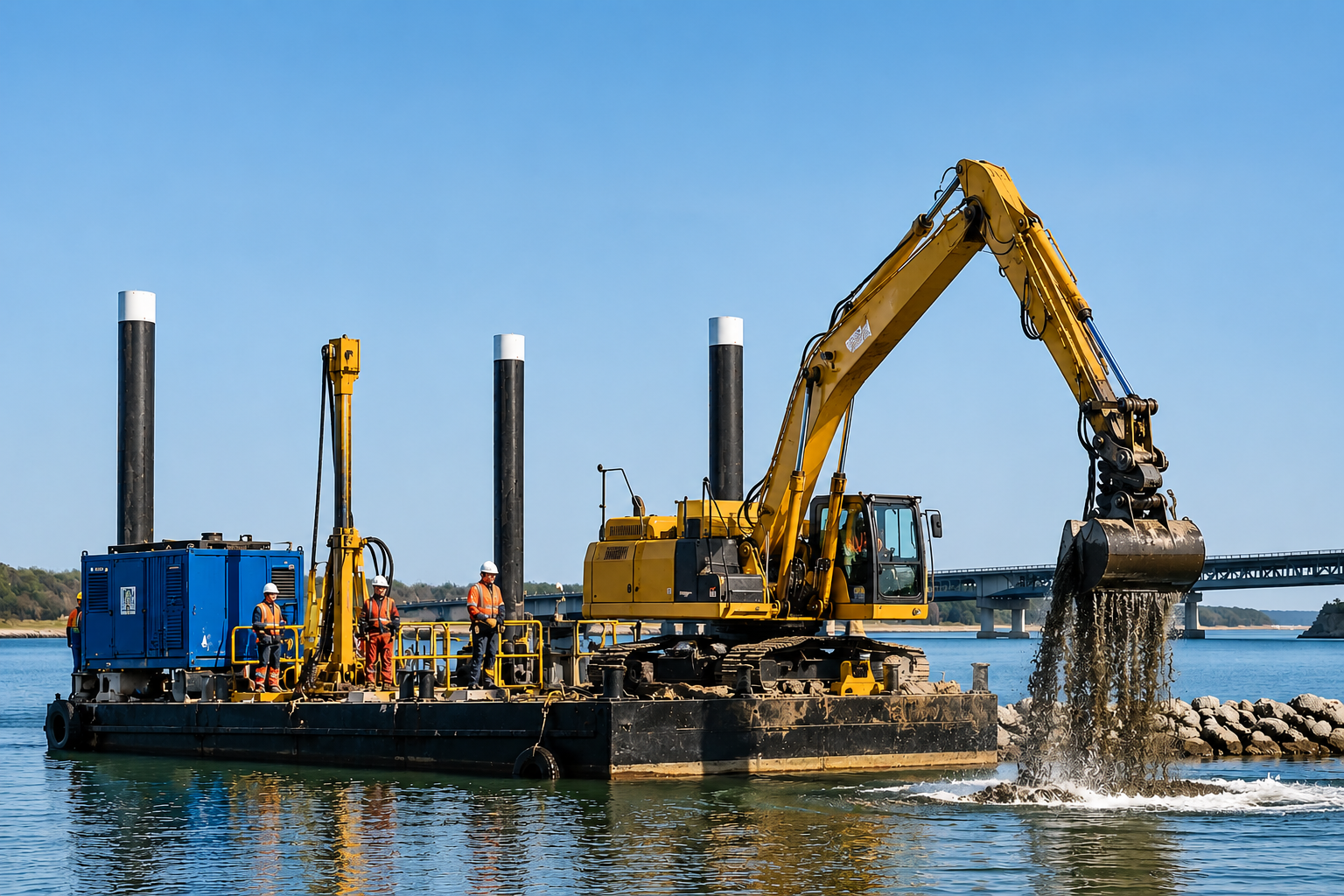
Some jobs sit just beyond the reach of land-based equipment. A structure may be on the water. A riverbank may be too soft for machinery. A flood-affected site may have no safe vehicle access. A crew may need to inspect, repair, recover, or build where trucks and standard plant simply cannot work.
It’s here marine plant hire becomes more than a convenience. It gives project teams a way to bring workers, tools, materials, and support equipment into places that would otherwise be difficult, slow, or unsafe to reach.
Water Access Changes the Whole Method
Working from land often depends on roads, firm ground, and clear access. Water-based work has a different set of rules. The crew may need to approach from the river, hold position near a structure, or move equipment across a section that has no practical land entry.
Marine plant gives teams another route into the job. Instead of forcing land equipment into poor conditions, the method can be built around the waterway.
That can make a major difference for inspections, repairs, recovery work, and construction support.
It Creates a Work Area Where None Exists
A crew cannot always stand where the work needs to happen. A bridge pier, jetty, river structure, pontoon, bank edge, or submerged object may sit beyond safe reach.
Marine plant can act as a floating work base. Depending on the job, that might mean a barge, workboat, punt, tinny, survey vessel, recovery gear, or support vessel. The main benefit is not just access. It is having a stable place for people and tools to work from.
This matters when the job needs more than a quick look. Repairs, surveys, diving support, and material handling all need enough space to work properly.
It Helps Protect Fragile Ground
Some waterside sites are not suitable for heavy land equipment. Riverbanks can be soft, wet, uneven, protected, or already damaged. Driving plant into those areas can create more disturbance than the job itself.
Approaching from the water can reduce pressure on the land side. It may help crews avoid tearing up access tracks, damaging banks, or needing temporary ground works just to reach the job.
This is especially useful when the work is temporary. If the crew only needs access for a short inspection or repair, building a heavy land-based setup may not make sense.
Crews Can Carry Tools and Materials Together
A common problem on water-based jobs is the number of trips required. One trip for workers. Another for tools. Another for materials. Another because something was forgotten on shore.
The right marine plant can reduce that back-and-forth. A suitable vessel or barge can carry workers, equipment, safety gear, and materials in a more organised way.
This helps when the work involves:
- Infrastructure inspections
- Small construction tasks
- Recovery support
- Diving operations
- Flood-related checks
- Repairs around jetties, bridges, or pontoons
Fewer trips can mean less wasted time and better control of the job.
Diving and Inspection Work Needs Proper Support
Underwater work is never just about the diver. The surface setup matters as well. Divers need safe entry and exit, clear communication, gear space, and a crew that understands what is happening below the surface.
Marine plant can provide that support. It gives the dive team a place to prepare, monitor, and work from while keeping the operation organised.
The same applies to infrastructure inspections. A vessel that can hold position and give the inspection crew room to work can make the difference between a rushed check and a useful assessment.
Marine Work Still Needs Planning
Hiring marine plant does not remove the need for careful planning. Water conditions, weather, loading, access points, crew numbers, safety gear, and work timing still need attention.
The team should know where the plant will launch, how it will reach the work area, what it needs to carry, and how long it will stay on site. If conditions change, there needs to be room to adjust the plan.
Marine plant gives access, but planning keeps the job controlled.
Conclusion
Marine plant helps crews work where land-based gear cannot reach or would cause more difficulty than it solves. It can create access, support divers, move materials, protect fragile ground, and provide a practical work base on the water.
The best results come from choosing plant that suits the site, not just the task name. When the waterway, crew, load, and work method line up, marine jobs become much easier to manage.